What ChatGPT, the Artificial Intelligence Chatbot, Means for Teaching and Learning

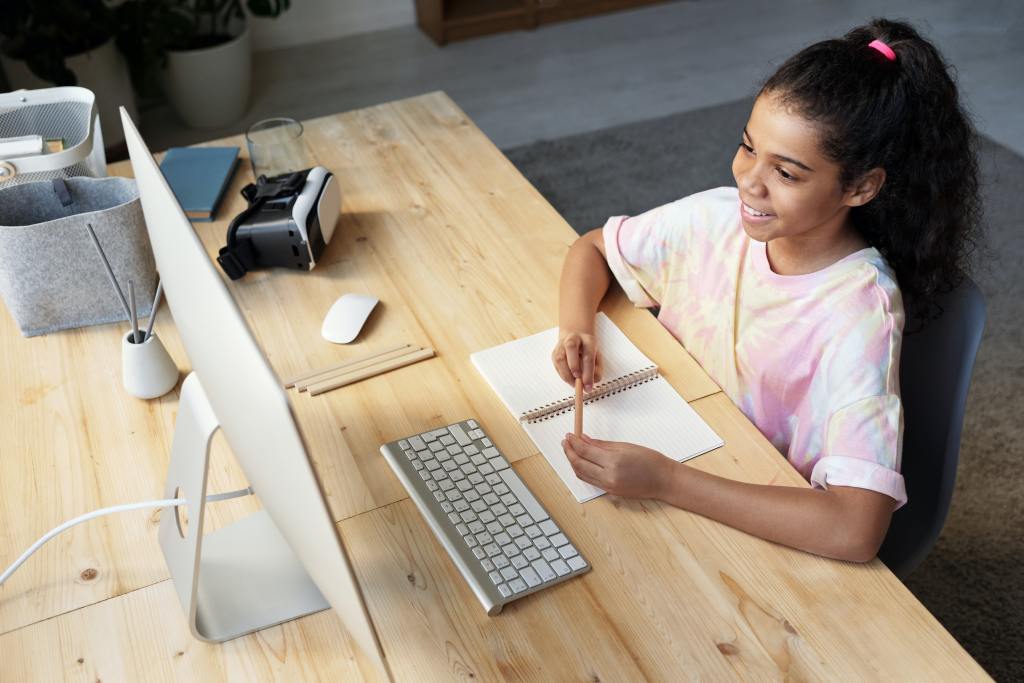
Young adult at a laptop, looking pensively
Credit: Pexels | Liza Summer

You’ve likely heard the term ChatGPT by now. Since its launch, this past November 30th, much has been said and written about ChatGPT and its implications on the way we live, work and learn… Sometimes even by the Generative Artificial Intelligence chatbot itself. 

Within five days of its launch, more than one million people had signed up to test ChatGPT, described by one New York Times article as a “highly-capable linguistic superbrain” – a head-spinning “mix of software and sorcery.” 

Coming from a digital media background, and interest in the way emerging technologies apply to teaching and learning as EdTech, I was curious what the implications were of ChatGPT on education in the not too distant future – neigh…now. (Because these impacts are coming whether or not we are ready for them and have already started to massively shift what’s taking place in classrooms, at homes, and on campuses in Canada and abroad.) 

What We Know About ChatGPT

ChatGPT, which stands for Chat Generative Pre-trained Transformer, is based on pre-existing Large Language Model technology called GPT3 that essentially provides exceptionally-humanlike, cogent and original text responses based on what prompts you give it. But while this sounds simple, what the tool can do is much more complex than that; It can write academic essays, summaries, poems, raps, memes, and jokes (that are actually funny). It can answer trivia, translate languages, produce course syllabuses, generate original recipes (with moderate success), spit out functional if imperfect computer code or drive interactive text-adventure games, mimic pop psychologists and celebrities, produce plausible cover letters and government bills, provide inspiration to creatives, and much more, giving even its makers pause. With ChatGPT, the more specific and detailed the prompts, the more fleshed out and human-like the results.

Some even say that this invention will render search engines like Google obsolete, and put many out of a job (some say even teachers), across various creative fields – challenging our perception of just how replaceable by robots we may ultimately become. 

ChatGPT comes by way of the world’s leading artificial intelligence lab, San Francisco-based OpenAI, and is partly funded by Microsoft, as well as Twitter and TESLA CEO Elon Musk. It is a neural network – a mathematical model loosely based on the human brain that scans vast amounts of digital data and recognizes patterns in that data, allowing it to learn to recognize what it’s looking at (say a cat), as well as to anticipate what comes next in a sequence of text. 

It essentially makes very good probabilistic guesses about how to splice together different bits of text in a way that is nuanced and makes sense. It has learned to do this by analyzing billions of examples across the Internet, including Wikipedia articles and books. Interestingly, ChatGPT won’t give you the same results every time, making each work original and difficult to trace. Depending on how you word your prompt, you’ll likely get a unique writeup, even if the context remains the same. And amazingly, it does this in seconds and at speeds no humans can compete with. 

We’re already using some of this tech in facial recognition technology and spoken commands you give Google, Siri or Alexa. And OpenAI is also behind DALL-E 2 — an image-generating application that creates completely original work based on what you tell it you want to see (not without its own controversy); it builds these images with bits and pieces created elsewhere (and by someone else) on the web and raising questions about copyright and just what constitutes original work (can we say the same of remixed music?). 

OpenAI’s latest model, GPT-3, scanned more digital data than its predecessors (it trained on 540 billion words to be exact), and its programmers are working to resolve issues with problematic language prior models generated (more on this in a bit). 

Not only did ChatGPT disrupt what many of us thought currently possible for an AI-fuelled chatbot to accomplish, but it’s also only the beginning, as the tech continues to evolve and learn (cue semi-jokes about HAL3000 and Isaac Asimov-esque plot twists). 

All this raises questions about whether we are at that inflection point of singularity – an irreversible future history in which the sentient robots we created cease control and reign supreme. To be clear, it’s hard to make a case for this at present. But still, we are nearing the text equivalent of what roboticist Masahiro Mori termed the “Uncanny Valley” in 1970 (the idea that there is a point past which a robot’s physical likeness to a human becomes deeply unnerving). 

How It’s Revolutionizing Teaching, Learning, and… Well… Everything 

Now let’s talk about how ChatGPT can impact teaching and learning. Paradigm shifts in teaching and learning aren’t unusual. Just think of the shortcuts calculators, grammar and spell-checkers, reading guides such as Cliff Notes and even the World Wide Web introduced. Students regularly carry the Internet in their pocket, and access to resources has never been easier for much larger segments of society (though still, unequally and incompletely).  
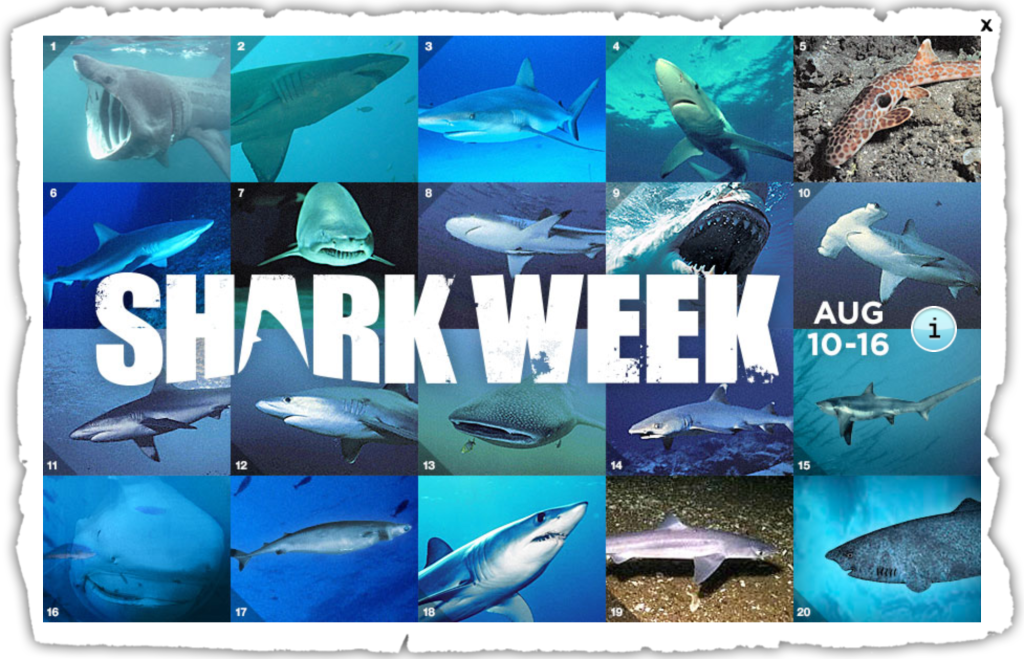
Nerd Alert 🦈 : New FREE Shark Week-Inspired Lesson Plan

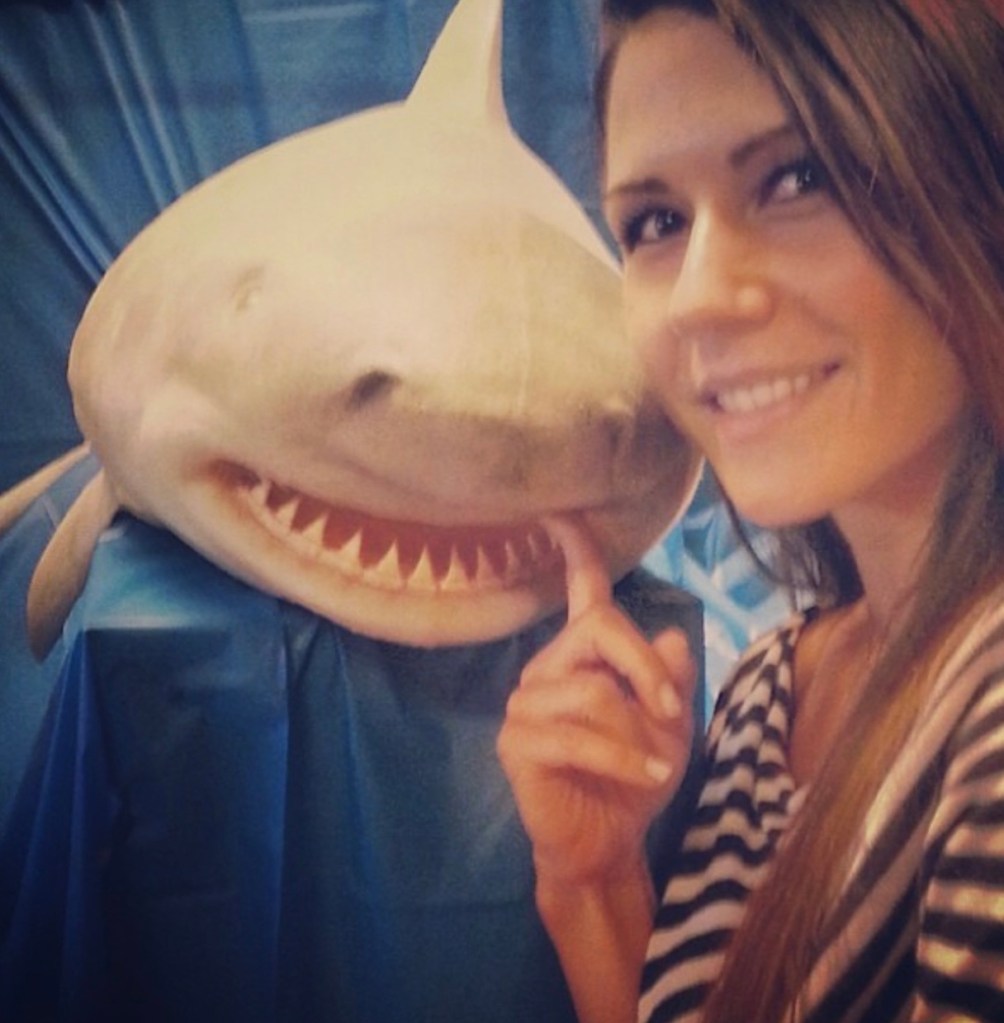
Meet my friend, Prosthetic Shark Pete

Extra Saturday post! I wanted to draw your attention to a FREE Shark Week-inspired resource I posted on TeachersPayTeachers, with additional teaching details here

Those who know me know my wild obsession with sharks. It’s a love borne out of countless childhood summers spent soaking in an annual pastime favourite: Shark Week (as well as a personal encounter in Croatia, when I was much younger). But also, funny enough, this fascination was carefully tended over my 10-year tenure working for Discovery Channel as an adult, here in Canada (note that National Geographic also has their own week-long celebration too, entitled Shark Fest). 

Each year brought this highlight, in lead-up to our digital rollout for Shark Week. Gradually, as I gained deeper insight, I began to understand and more carefully appreciate how nuanced and critical this species is (they are what’s called an anchor species), and how interlocked our very survival was with theirs. With this mental shift came the push to steer the narrative away from sharks breaching and chomping on anything and everything in sight, and more towards greater (and healthy!) respect for their tenacious ability to survive several mass-extinctions…until now.

Armed with the knowledge that there are in fact more than 400 species, presented me with a vastly varied image from the simplistic Jawslike monster I was so used to seeing.

This motivated me to lead an interactive project meant to highlight this diversity of sharks (Sharkopedia), as well as to create an interactive map bringing to light just how few and far between unprovoked shark attacks actually were (and by contrast, where in the world, sharks were most in danger from human activity). 

It’s a tricky concept to wrap our heads around (an apex predator we depend on), but nonetheless one still worthy of the effort.

As a result, this passion now found a new channel: a lesson meant to do the same for those looking to try a fun activity (a virtual shark dive), learn (or teach) some new concepts (apex predators, and anchor / keystone species), all while sharpening our ability to look at media a bit critically too (Ontario curriculum expectations-aligned as well). 

It was only a matter of time before I geeked out on this topic (sorry, not sorry), but this means I’m also happy to expand on anything, should you have any questions or comments. 🤓

5 Things Game-Based Learning Is and 5 Things It Is Not

In an earlier post, I explored how social technology tools (such as Twitter, Wikis, etc.) can be used in educational Alternate Reality Games, designed to engage student learning. 

In that post I explained that, “ARGs are interactive, networked narratives (dubbed storyscapes) that behave like complex scavenger hunts. They rely on existing real-world environments as their game space and employ transmedia storytelling, often both online and offline, to deliver content that may be altered by students’ ideas or actions. They can be considered “games you play in order to get more out of real life, as opposed to games you play to escape it” (McGonigal, 2011, Chore Wars, para. 30). 

Such ARGs have the potential to provide learning environments that help foster competencies and extend education to where learners are not only consumers of knowledge, but producers of it as well; a critical 21st Century competency

To rewind a bit, I also wanted to explore and clarify what Game-Based Learning is and what it is not, as there can be a lot of misconceptions about gaming in education, in general. 

No matter the genre or mode of delivery, games have a few simple defining traits in common: a goal (and obstacles that complicate its pursuit), rules and a feedback system (McGonigal, 2011, para. 5). In fact, some argue that what may be taken as a simple pastime is “not an ephemeral, inconsequential activity, but an essential, perhaps central factor in civilization” (Abba, 2009, p. 63). Educators are looking at gaming as a way to propel education further, contributing to the field known as Game-Based Learning. 

Game-Based Learning (or GBL for short), may be especially relevant in the context of Remote Learning and Learning From Home, where students are already learning outside of the traditional classroom

(1) Game-Based Learning Is: A broader concept, which includes Alternate Reality Games

Game-Based Learning is the intersection where education and games converge. Game-Based Learning includes thoughtful, structured learning objectives designed to evoke and engage specific skills and / or competencies. Game-Based Learning includes Alternate Reality Games (ARGs), but go beyond to also include much more simple math games with playing cards, for example.

(2) Game-Based Learning Is Not: Learners playing non-educational video games

One of the biggest misconceptions is that GBL means learners sit and play popular consumer video games for hours on-end. Game-Based Learning can include intentionally-educational video games, but not all video games are educational video games. And in fact, not all GBL includes technology at all.

(3) Game-Based Learning Is: Intentionally structured to include learning objectives

GBL must include intentionally-structured learning objectives, based on grade level and learning expectations. 

(4) Game-Based Learning Is Not: One size fits all

As Game-Based Learning is but one educational tool educators can leverage, it is broad in scope and so, it is customizable to fit the learner’s needs. The game can vary educator-to-educator and learner-to-learner. 

(5) Game-Based Learning Is: Engaging 

While certainly not true of all Game-Based Learning, well-structured GBL can be designed with learner engagement in mind (for example, what is the learner passionate about? Dinosaurs, Robotics? Outdoor play?). This can provide a level of interest and investment in the learning by the learner, providing one advantage over the traditional “chalk-and-talk” teaching that can sometimes exist inside our classrooms.  

(6) Game-Based Learning Is Not: Always competitive 

Not all games are zero-sum based, where winning comes at the expense of an “opponent’s loss”. There are many cooperative games, where winning is very much centred on a learner’s ability to cooperate with others. 

(7) Game-Based Learning Is: About opportunities for “safe failure” and “failing forward”

Games in general offer a play-based approach to tackling challenges and obstacles. In GBL, the stakes are not high enough to permanently damage a learner’s future opportunities, but allow them instead to safely practice the necessary skills to overcome those challenges in real life, down the road. They employ the idea of “safe failure” where learners can experience failure, but have the option to persist at the task until they can become successful at it (“failing forward”).

(8) Game-Based Learning Is Not: All or Nothing 

GBL need not be an all or nothing approach. As it is so customizable, it is also scalable. It can encompass one lesson or even one part of a lesson, or an entire unit of study (or even multiple units of study across multiple subjects, as can be the case in cross-curricular learning). It can be as complex or as simple as the learning objectives require.

(9) Game-Based Learning Is: Inclusive in nature 

If structured with the learners’ needs and resources in mind, it can offer a model for inclusive teaching. GBL can offer “multiple points of entry” so learners can engage with the learning at their level of readiness, not an externally-imposed one. 

(10) Game-Based Learning Is Not: Always effective 

Not everything needs to be “gamefied.” In fact, not all learning is best done through GBL. Some studies suggest and question the effectiveness of GBL, and with reason. But that is not to take away from instances where GBL can truly enhance learning and better-engage learners.

Modelling Inclusivity and Anti-Racism to Your Little Learners

Education, like parenting, is inherently political — whether in the lessons you choose to teach, or in the ones you omit (intentionally or otherwise). As parents are their child’s earliest teachers, it’s important to take stock of just what you are modelling to your little learners, and to question what messages about diversity, inclusion and anti-racism they are internalizing.

As a starting point, these are the day-to-day ways you can ensure you are modelling diversity and equipping your children with tools to be inclusive, open-minded, anti-racist, and ethical adults as well as collaborative global citizens

Look at how you include diversity in: 

  • Your relationships 
  • Who you learn from and with
  • Your sources of information 
    • Are they diverse voices with a range of lived experiences, or do you operate in an “echo chamber” — where you only seek out opinions and perspectives that reaffirm your own views; this is known as confirmation bias.  
  • Your place of worship 
  • Your neighbourhood 
  • Your beauty standards 
  • How and where you travel
  • The activities you choose to participate in
  • The toys you buy for the kiddos in your lives 
  • The businesses you support 
  • The voices you amplify
  • The language you use (words and phrases)
  • The books you read to and with your kids, as well as the stories you tell

Once you’ve done this, actively work to challenge your own biases and to seek out information that covers your blind spots (we all have these). And don’t be afraid to engage your children (in an age-appropriate way) in conversations about race, privilege, and what each of us can do to create a healthier, stronger society together.

The Top 6 Competencies Your Learners Will Need Most For a Complex Future

Credit: Pexels | Julia M. Cameron

In a fast-changing, dynamic and hyper-connected world, what abilities will your learners need to have most?

For the past century, schooling has largely been contained within classroom and school walls, and students who graduate have acquired great skills in conforming to the learning expectations defined by others: doing what they have been instructed to do. But today, when those students go into the workplace and the wider world, they are suddenly confronted with the expectation that they need to do very complex things without any instructions. Schooling today thus fails to fully prepare our young people for their futures” (Fullan & Langworthy, 2014, p. 35). 

In response to this recognition, the Ministry of Education here in Ontario produced a document outlining the 21st Century Competencies today’s students will need for a complex global tomorrow.

These competencies are:

  1. Critical Thinking and Problem Solving

What this looks like:

  • Solving meaningful, real-life, complex problems 
  • Taking concrete steps to address issues
  • Designing and managing projects
  • Acquiring, processing, interpreting, and analyzing information to make informed decisions (critical digital literacy) 
  • Engaging in an inquiry process to solve problems 
  • Making connections and transfers learning from one situation to another

2. Innovation, Creativity, and Entrepreneurship

What this looks like:

  • Contributing solutions to complex problems
  • Enhancing a concept, idea, or product 
  • Taking risks in thinking and creating 
  • Making discoveries through inquiry research 
  • Pursuing new ideas to meet a need of a community
  • Leading and motivating with an ethical entrepreneurial spirit 

3. Learning to Learn (Self-Awareness and Self-Directed Learning)

What this looks like:

  • Learning the process of learning (metacognition) 
  • Believing in the ability to learn and grow (having a growth mindset) 
  • Persevering and overcoming challenges to reach a goal
  • Self-regulating in order to become a lifelong learner 
  • Reflecting on experience to enhance learning 
  • Cultivating emotional intelligence to understand self and others
  • Adapting to change and showing resilience to adversity
  • Managing various aspects of life — physical, emotional (relationships, self-awareness), spiritual, and mental well-being

4. Collaboration

What this looks like:

  • Participating in teams; establishing positive relationships 
  • Learning from, and contributing to, the learning of others
  • Co-constructing knowledge, meaning, and content 
  • Assuming various roles on the team
  • Managing conflict 
  • Networking with a variety of communities and groups 
  • Respecting a diversity of perspectives 

5. Communication

What this looks like:

  • Communicating effectively in different contents in oral and written forms
  • Asking effective questions to acquire knowledge
  • Communicating using a variety of media 
  • Selecting appropriate digital tools according to purpose 
  • Listening to understand all points of view
  • Gaining knowledge about a variety of languages 
  • Voicing opinions and advocating for ideas 

6. Global Citizenship 

What this looks like:

  • Contributing to society and the culture of the local, global, and digital community in a responsible, accountable, and ethical manner
  • Engaging in local and global initiatives to make a difference 
  • Learning from and with diverse people
  • Interacting safely and responsibly within a variety of communities
  • Creating a positive digital footprint 
  • Relating to the environment and being mindful of the importance of all living things 

Source: 21st Century Competencies (Ontario Ministry of Education, p. 56) 

Social Technology Tools in Educational Alternate Reality Games

“If children can build, play and understand games that work, it’s possible that someday they will understand and design systems that work. And the world is full of complicated systems.”

— Sara Corbett, Journalist, New York Times

Credit: Unsplash | N.

This week, I am pivoting a bit and telling you about my focus of research while pursuing my Master of Teaching degree at the Ontario Institute of Studies in Education at the University of Toronto. As part of our Social Media in Education course, we investigated a critical question of our choosing. In general, I am very interested in Game Based Learning; specifically, educational Alternate Reality Games (ARGs) (one reason aligns with Corbett’s quote above).

ARGs are interactive, networked narratives (dubbed storyscapes) that behave like complex scavenger hunts. They rely on existing real-world environments as their game space and employ transmedia storytelling, often both online and offline, to deliver content that may be altered by students’ ideas or actions. They can be considered “games you play in order to get more out of real life, as opposed to games you play to escape it” (McGonigal, 2011, Chore Wars, para. 30). Such ARGs have the potential to provide learning environments that help foster competencies and extend education to where learners are not only consumers of knowledge, but producers of it as well.

A step away from the passivity that learners may associate with the traditional classroom, the dynamic nature of Serious ARGs can motivate players by giving them a focused problem to solve. The solution process elicits knowledge and learning rewards, while goal-driven environments morph player game play into a focused, engaged learning experience (Lynch, Mallon, Connolly, 2015, p. 35).

ARGs are a relatively unfamiliar concept, particularly in the realm of education. Patrick Jagoda, PhD, Associate Professor of English at the University of Chicago, does a great job giving a bit more background in the video below. Jagoda is also a researcher behind one of the articles and ARGs I analyzed (The Source).

To help demonstrate what a serious ARG looks like in practice, here is a trailer for the ARG Urgent EVOKE, by game designer and author, Jane McGonigal (cited above).

ARGs can be used as instructional tools in any subject (often with a cross-curricular lean), and as part of media pedagogies; they can be used to teach History, STEM subjects, literacy and any combination therein. They often challenge students to problem-solve and to employ other 21-century competencies (such as collaboration).

As there appears to be a research gap with educational ARGs in general, and in the way social technologies are best utilized within ARGs, specifically, I created an annotated bibliography that reviews articles with a more a general focus on ARGs. Within these articles, I then considered how social technologies are leveraged in each case.

This Annotated Bibliography helped inform and illuminate a response to my critical inquiry:

“How can social technologies successfully be integrated into Alternate Reality Games intended as instructional tools in the classroom?”

Top 7 Tutoring Pro-Tips to Help You Make Most of Your Child’s At-Home Learning

Credit: Unsplash |Neon Brand

Teachers have a legal and moral duty to care for their students best summarized by the Latin phrase “In Loco Parentis” — in the place of a parent. In Ontario, and in many other parts of Canada, it’s the doctrine teachers embody in their practice and in their classrooms. 

But we now find ourselves in an unprecedented time where parents need to take on the role as surrogate classroom teachers, as schools, daycares and many other places remain under lockdown. 

For many families, this is the start of Week 10, and even as some restrictions have begun to ease, schools remain closed in Ontario. If you are fortunate enough to have the time to devote some attention to your children’s learning yourself (think of yourself as their tutor), here are five tutoring pro-tips to ensure the time is spent meaningfully. 

Credit: Unsplash | Jeremy Avery

Tip 1: Choose your tutoring time strategically

If you have some flexibility, choose the time you spend with your child focusing on reviewing their learning strategically. Opt for a time when they are well-rested, not hungry, and when they are likeliest to be focused and cooperative, and that you can regularly schedule. Often, this can be mid-morning once or several times a week, but it can also follow an outdoor break or some kind of physical activity early in the afternoon. The idea is that your child has had the opportunity to have their basic needs met, and to have had a chance to shed pent-up energy (there is a reason recess was invented). If evening time is the only time that works for you, go for that. Even one weekly session consistently can lead to positive results over the long-haul, and this is a marathon, not a sprint, so find something that works for your family’s schedule. Then — and this is the important part — communicate this time in advance to your child. You can say something along the lines of, “On Saturday, after breakfast and our walk, I want us to sit together and take a look at how school has been going. I’m here to help support you, and answer any questions.” 

You will likely face frowns, moaning and some (or a lot!) of resistance at the idea, but I’ve learned that over time, kids appreciate knowing what to expect and what’s around the corner, and that they are more cooperative and less anxious over the long-haul. Then — and this is the other critical component — commit to this time. Pencil it in, and plan around it.

In the meantime, you may also want to review the 10 teaching considerations to help understand how best to support your child’s learning.

Tip 2: Come prepared and state your intention and learning goal 

Find a clear workspace such as at a table, prep whatever materials you’ll need to help them with their work (notebook, pen, pencil, eraser, laptop with preloaded resources such as the dictionary, thesaurus, etc.). Then sit 90 degrees from your child, so you can have good eye contact, while also seeing their work, and share with them what you’re hoping to accomplish in this time. 

The very first session might include simply having them show you and walk you through their work so far. What have they done so far, what are they most proud of? It’s important to give them the opportunity to feel successful and to establish a positive tone for your sessions (this is not the time to be overly critical, and it’s important to keep this situation, their stage of development in check). 

Credit: Unsplash | Lewis Keegan

Tip 3: Signal your undivided attention

Signal they have your full attention.This is not the time for interruptions or distractions. Kids learn by example, and when they see the level of attention and energy you devote to their learning, they are more likely to take their own efforts more seriously. Put the phone down and away, and turn off any distractions, including any notifications on your devices. 

Tip 4: Review what’s New 

Marina Koestler Ruben’s excellent book How to Tutor Your Own Childsets aside some time to review what your child has learned up until now. She advises not to ask “if there anything new,” (this gives them an all-too-easy out with a simple conversation-shutting “no”), but “what is new?” What has your child been learning in the last X amount of time? You may want to ask them to break things down by subject, and for older students, to review any assignments or feedback they have received from their teacher(s). When it makes sense to do so, feel free to work in any personal related anecdotes to help learners connect their learning to the wider world. 

Tip 5: Review what’s Now

Once you’ve gotten a good sense of what’s happened to this point, ask your child what are they currently working on? What assignments do they have? What are they learning now? Remember: You don’t have to tackle everything all at once in one session, so prioritize and ask them what task / assignment would be most helpful to focus on right now? It may be most helpful to focus on any topics that are confusing or unclear first. If you don’t have all the answers (and who does), you may want to help your child find reliable resources that can help clarify their questions (if you don’t have the answer, that’s ok — you can figure it out together). 

If your child is less open about discussing what they are struggling with, you may need to rephrase your prompt to, “Tell me / show me what you know about X topic,” and have them walk you through their understanding, and then try to identify any learning gaps. Ask follow-up questions, and ask them to demonstrate, not just describe, if appropriate (i.e. long division). 

Tip 6: Plan for what’s Next

Depending on how the previous part went (as well as how old your child is, and how long your they have been sitting), you may want to include a brief “brain break.” This can be a brief break that includes some sort of physical movement, or the opportunity to run to the bathroom, refill water, etc. (this doesn’t need to be long — can be 5-10 minutes). 

Once back at the table and seated, you want to focus on what is coming up next: any long-term or ongoing assignments, review due dates, and consider what learning will happen in the week ahead. You may also want to ask your child, “what do you think your teacher will teach you next, that’s related to X?” You want to instil a habit of looking ahead and anticipating learning, rather than just reacting to the learning. It’s a different level of student engagement. 

Tip 7: Quit while you’re ahead

When you’ve accomplished your learning goals for the session, or if your child has had enough, leave off on a high note. Share one positive observation about your child’s efforts during this session, and ask them to consider what they want to work on. You want to establish a positive association with these sessions, and don’t exhaust the learning or the learner. 

It may be more helpful to start with multiple shorter sessions and build towards a longer single session, to help your child adjust, if needed. 

Lastly, establish with your child what goals they can work towards for the next session, and establish how you will be able to measure / assess together whether they’ve met them (is it to read X number of pages, complete a section of an assignment, etc.). Set aside time for your next session and repeat.

As always, these resources are here to help support you and your learner, and I’d love to hear what’s working or not working for you. Feel free to follow me on Twitter or Instagram, and share your questions, concerns, or experiences, and I will do my best to help. 🤓

Struggling to Keep Your Children Engaged in Remote Learning? Focus on Teaching Life Skills Instead

Credit: Unsplash | Annie Spratt

Last week, I posted some resources for parents who are looking to introduce a school-day type structure into their kids’ days, should they be ready. 

This week, I want to talk about the kids and the parents who are in a different situation…who’re struggling to cope with this new normal and who are barely making it day-to-day, never mind aligning their child’s learning with some far out, pretty-on-paper schedule.

These may be parents with likely younger kids who have shorter attention spans than older learners, kids with learning exceptionalities in need of greater supports in and out of school, and kids whose parents have stacked work days as it is, with busy schedules of their own. 

I have heard of some parents shifting gears and withdrawing their kids from homeschooling altogether. If your situation is more similar to this group, you are not alone and may want to focus on teaching your child valuable life skills instead. 

My teaching philosophy centres on an inclusive definition of learning, and that includes informal learning (such as knowledge and experiences passed down generation to generation through storytelling), as well as learning through travel and experiential learning. This period of physical distancing and social isolation makes it a perfect time to share with your own children all the valuable skills they will need as they grow up. In the process, consider folding in arithmetic, reading and communicating. 

Here are some suggestions for activities to focus on instead: 

Credit: Unsplash | Karlie Gomez

COOKING: (measuring = math; mixing ingredients = chemistry). Food Network Canada has a whole section devoted to cooking with kids.

  • Skills to teach include: 
    • Kitchen safety and safe storing of food
    • Meal-planning and simple meals and snacks like sandwiches
    • Cutting and peeling
    • Breading and shaping
    • Using a simple appliances and a blender (healthy smoothies)
    • Simple baking (chocolate chip cookies)
    • Making simple meals on the stove (grilled cheese)
    • Cooking staples such as rice, quinoa and other grains and cereals
    • Following simple recipes and helping as the Sous Chef
    • Cleaning up  

LAUNDRY: (matching, sorting and organizing; folding improves motor skills)

  • Skills to teach:
    • Separating by colour and type of laundry 
    • Adding the right amount of cleaning product for the load
    • Drying 
    • Patching and basic sewing
    • Folding 
    • Putting away

BANKING AND BILLS: (dollars and cents; counting; financial literacy & budgeting; economics)

  • Skills to teach: 
    • Banking (account types and their purposes)
    • Minimum balances and fees
    • Income and expenses 
    • Managing needs vs. wants
    • Setting financial / money goals
    • Making budgets 
    • Smart spending
    • Cost-cutting and saving 
Credit: Unsplash | Jonathan Borba

GARDENING: (seasons, weather, geography)

  • Skills to teach: 
    • What plants need to survive
    • The three sisters: plants that thrive together
    • Sustainability & food waste 
    • Heirloom seeds (you can also have them look into the Svalbard Global Seed Vault
    • Botanical classification 
    • Different regions and plants of the world, with focus on local 
    • Creating a reading garden 
    • Bird feeders 

HOUSEKEEPING, TIDYING & CLEANING: (looking after and caring for the things we have)

You can also teach them a skill you are particularly good at (drawing, guitar, auto mechanics, carpentry, cartography & navigation, film and cinema, photography, documentaries, knitting — whatever your passion, fold them in). Also, allow them to deepen the skill they are passionate about (drawing, gaming and game theory, music, video production — they take the lead, but hold them accountable for demonstrating what they’ve learned).  

If you and your learners do have the bandwidth to incorporate some academics, focus on encouraging your learners to read as much as possible, and involve them in conversations based on the ideas of the readings. You can do the same with movies, if they are old enough. 

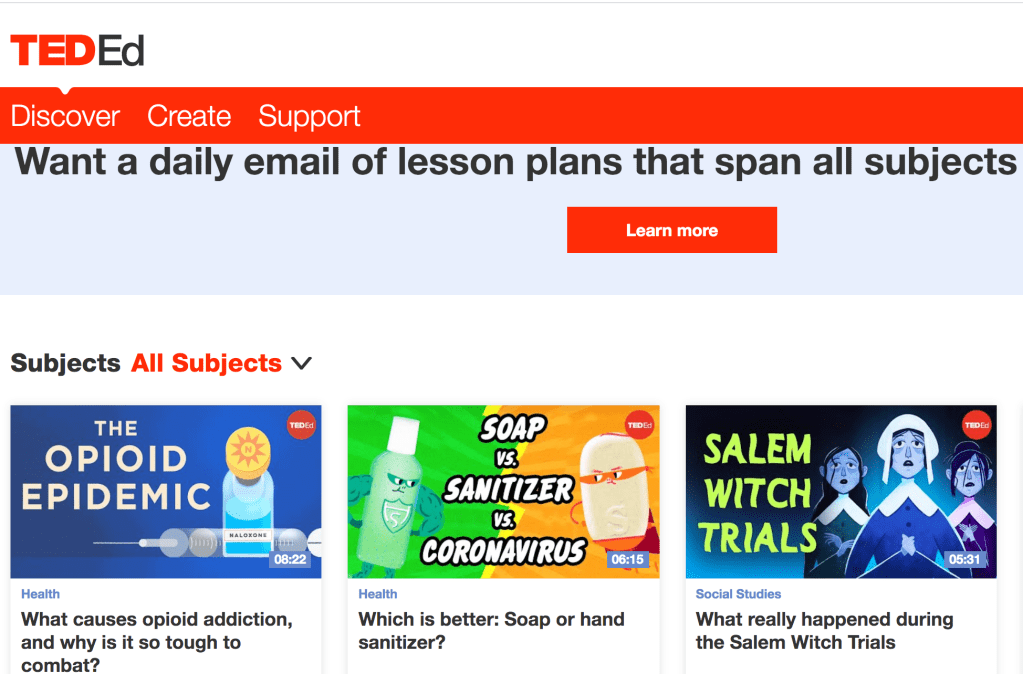
If you need shorter conversation-starters that are still education-based and are inclusive to many types of learners, I’m a big fan of TEDEd — quick snackable videos that cover a range of topics and offer supplemental material and are an offshoot of the now well-known TED Talks.

Credit: TEDEd

As always, I’m happy to hear what’s working and what’s not, as well as to share resources and ideas. Feel free to leave a comment and share your thoughts. Wishing you a great start to the week (week 9 for many). 🤓

Resources for Parents: How Teachers Structure Their Lesson Plans and Day Plans (Daily Subject Schedule) for One Full Week

Credit: Unsplash | Rainier Ridao

As teachers are expected to teach the local provincial curriculum (here, that’s the Ontario Curriculum for Elementary and Secondary grades), teaching is very intentional; teachers take great care in structuring their lessons so they evoke student learning. 

To help them organize the flow of the lesson so it progressively goes from simple to complex, and from guided to independent, teachers rely on lesson plans to scaffold student learning

To help during this unprecedented time as we remain under lockdown, I’ve provided sample Lesson Plan templates via Google Docs that will automatically prompt you to create a blank copy for your personal use only (and so multiple people aren’t making changes to a single document). 

The first is the one I’ve come to use in my own teaching while the remaining three are Google templates.  

FREE Lesson Plan Templates:

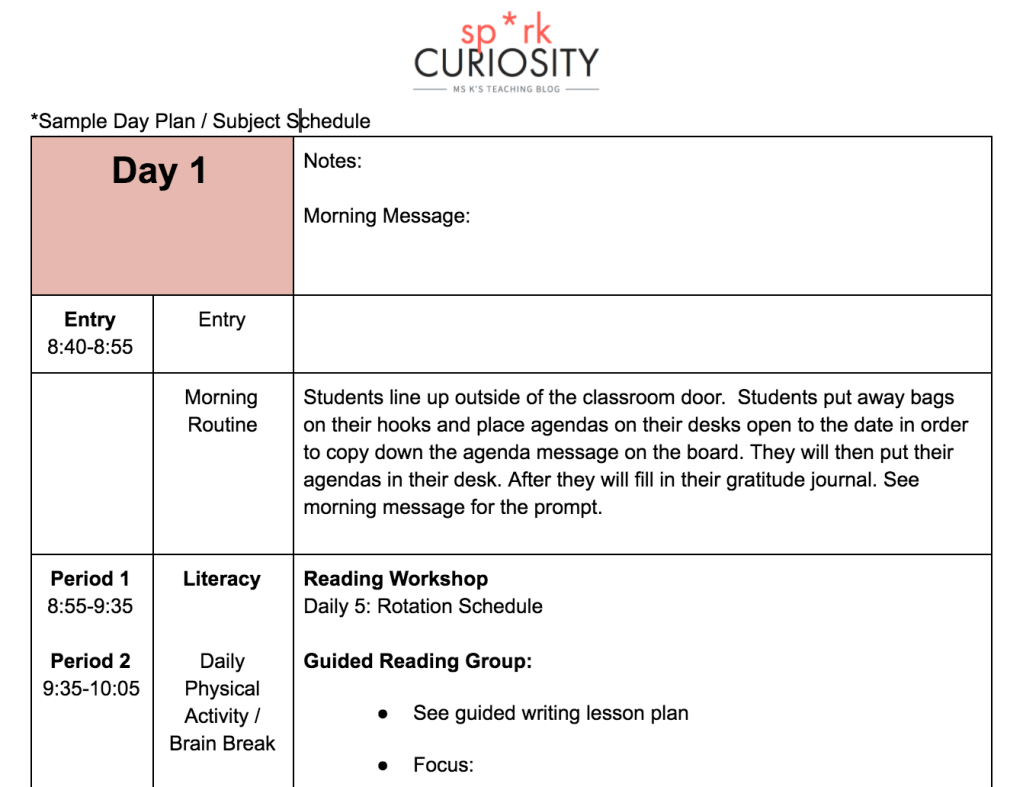
I’m also attaching a sample daily schedule to help parents understand how teachers structure their days for Junior / Intermediate students (Grade 4-6 and 7-8). As these are free resources, they are not intended for anything other than for your own personal use, and to help you structure your child’s learning during social distancing and the COVID-19 pandemic, should your child be ready to transition to a more structured daily schedule (not all learners may be, and this is OK; each child is coping differently during this pandemic). 

FREE sample daily schedule (what a daily schedule is like at school) and day plan

Additionally, Google has launched their own Google for Education learning portal with some interesting learning resources, such as for Language, Arts & Culture resources (note that these aren’t specific to the Ontario curriculum, but may complement some objectives nicely). 

My hope with these posts is to help support parents and learners, and if you would like to see anything specific, please comment below and I will do my best to help. 🤓

Try This Easily-Scaled Activity That Doesn’t Require Worksheets

Credit: Unsplash | Emma Matthews

Like many things about the COVID-19 pandemic and social distancing, families are going through various stages of coping with this new reality at home…We’ve seen denial that the novel coronavirus was a threat, to eventual acceptance that it was here and it was real, to panic-buying and empty shelves, to #CancelEverything and the ultimate retreat indoors. We’ve gone through baking and cooking projects (sour dough, and more), living room concerts and DIY haircuts… 

Many families are now starting Week 7 of social distancing, and with public schools in Ontario remaining closed at least until the end of May (and likely longer), there is ongoing need for learning resources that students can use to continue their learning from home.

One thing I’ve heard from parents with younger kids is that there is worksheet fatigue…While worksheets can be a great way to organize and plan bigger projects, and while they offer families some flexibility for focused independent work, they aren’t always terribly exciting to younger learners, and don’t always engage and include learners with exceptionalities.

One Literacy / English-based activity that is easily scaled and individualized for each learner and their age, and is engaging and topical, is a Covid-19 Time Capsule Activity

The idea is that we are living through history and want to commemorate this historic period for future reflection using a few guiding principles. While you can certainly use worksheets if this works best for your learner (this is one great free resource), you may also want to engage more tactile learners in other ways. 

You can even make this a family project by having each family member make their own artefact time capsule for posterity (yes, this includes you — favoured zoom wine you wish to bury?). You can then pack your individual time capsules into one joint family capsule. Some ideas: Adults can create a time-specific scrapbook. Older learners can focus more on symbolic artefacts and even produce their own highly visual digital time capsule, by using free tools such as Pinterest or Google Sheets creating something akin to a vision board, or do a video diary by recording quick videos in closeup of what their day was like. Here is a step-by-step process of how you can even use Google Slides to create a digital time capsule (it will automatically force you to create your own personal copy of the docs and the slides so your child can edit it).

If they require guidance for what to include in their video, you can have them respond to the following: 

  • Rose – Something positive that went well that day
  • Thorn – Something difficult or challenging that they’ve been working through
  • Bud – An opportunity or something they look forward to cultivating 
Credit: Unsplash | Roy Kasturi

For more tactile learners, your child can customize a container such as a box, bottle or a hollowed out book, and place “artefacts” (objects), newspaper clippings, pictures if you have a printer or polaroid, drawings and the like that are reflective of what they are experiencing right now. Draw your learner’s attention to their senses (what is a common sight, sound, smell, taste, touch in their new day-to-day), as well as to describe their feelings. Remind your learners that there are no right or wrong things to include here, but that whatever they include should be reflective of how they are spending their days and what they are observing around them. Ask them to imagine how someone who finds this time capsule 30 or 50 years from now might be able to understand what this time was like.  

As with any time capsule, its key is its “timeliness,” so set a timeframe for what time you wish to encapsulate, and then commit to “closing” this time capsule on this day (you may choose to close it the first day that social distancing restrictions are significantly eased). You may even choose to commemorate the closing of the time capsule with a family ceremony, if you’d like. This can be an ongoing project, and can include the creation of one “artefact” per day. Add dates, and get creative.  

If you wish to share your results, tag me on Instagram @ms_ks_korner — I would love to see your creations!   

10 Teaching Considerations for Parents Teaching Their Kids at Home

While not many parents have the option to devote a tonne of time facilitating their children’s learning during the COVID-19 Pandemic, there are some factors to consider that help ease the process. Here are the top ten things you should keep in mind when helping your child learn from home.

Factor 1: The New Normal is Abnormal

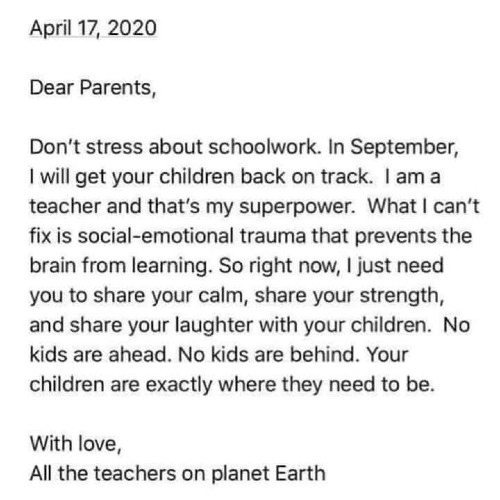
First and foremost, consider that these are abnormal circumstances, and that any learning that is to happen, is happening in the midst of a world-wide crisis. There are a lot of feelings tied to this, and it is worth acknowledging your own child’s response…This post by a teacher is a good, guiding principle for those that are having a harder time coping with this new abnormal normal. 

Trauma and stress in general do block the brain’s ability to absorb, process and retain information, so it’s always best to begin any learning facilitation from a place of compassion. 

Factor 2: Learning Exceptionalities 

What learning exceptionalities does your child have? Has your child been assessed for any exceptionalities and do they have an Individualized Education Plan (IEP)? If you haven’t looked at it yet, this is a good place to start. Does your child require visual or auditory aids? It would be unfair and unreasonable to expect them to get through a written article or text-based worksheets without assistance if they require a “modification” (teacher-speak for delivering the same content in a different mode, such as video). Exceptionalities include giftedness, autism, ADHD, and can even co-exist as multiple exceptionalities in a single learner. Recognizing this can help remove learning barriers, and allow you to meet your child wherever they are on their learning journey.   

Factor 3: Age & Developmental Stage

Consider your child’s age and / or developmental stage. The brain develops in phases, so it’s important to keep your child’s readiness in mind. No child I’ve ever met learned to run before they learned to crawl. 

Factor 4: Prior Learning 

What has your child learned already? Have they learned the alphabet but are only starting to learn phonics (the ability to hear, identify and manipulate phonemes — distinct units of sound). Or have they learned to write basic sentences, but have yet to combine multiple sentences into a thematic paragraph? 

Teaching and learning are all about scaffolding — the idea of moving learners progressively towards deeper understanding and greater complexity.  

Factor 5: The Subject

What subject are you focusing on? Traditionally, subjects depend on grade level / developmental stage, and they are divided relatively neatly into areas such as Literacy, Numeracy, Social Studies, Physical Education, etc. 

It  may be helpful to refer to the Ontario Curriculum documents for elementary and secondary grades to see what your child is expected to have learned by the end of this year. 

In more flexible learning environments, such as perhaps right now, it may be helpful to combine multiple subjects into single learning experiences.

Factor 6: Your Child’s Interests, Talents, and Abilities  

While this is currently listed as the 6th item on this list, it belongs equally in the first slot…Tapping into your child’s natural sense of curiosity and wonder will not only motivate their learning, it will increase the chances of making any such learning a positive experience, and raise the likelihood of the topic being remembered. Your child’s interest provides a door through which you can impart many lessons. 

Factor 7: Make Learning Social

If possible, connect to other parents and their children, and coordinate discussions (likely unlikely for many families, but worth mentioning). Otherwise, engage your child in conversation about what they learned and eek out their opinion on the subject. Ask open-ended questions, offer encouragement, and create space for them to be heard. 

Factor 8: Embrace Informal Learning 

Allow for informal learning to happen and count that it too contributes to your child’s overall base of knowledge. So let them disconnect, watch that YouTube video, read a comic or play that video game. Then, try again. And again. If you don’t already, include them in meal preparation, laundry, budgeting, and other tasks that need doing. Life skills such as these should be part of any child’s learning, in and out of school. 

Factor 9: None of This Will Work All the Time, Always

Despite all your hard work and consideration, sometimes no amount of attention to the above will make your efforts land the way you expect them to…. This is ok, even the most experienced teachers go through this and this is also part of the learning process. Sometimes your child will be especially resistant, throw a fit, have a meltdown — and you may feel like you’re on the verge of one too. Take a breather… As the first factor suggests, the most important thing here is that you remain connected to your child. 

Factor 10: Reflect

Consider what worked well and what didn’t. Teachers are taught to approach their practice through constant self-reflection. What would you do again? What would you do differently next time? Take note. Tomorrow is a new day. 

How to Help Your Child Learn From Home During the COVID-19 Pandemic and Social Distancing in Ontario

Credit: Unsplash | Emma Matthews

As we settle into this new, bizarre version of normal, let’s take a moment to recognize that nothing in this reality is ideal. 

This includes how we manage our children’s time and learning. (A bit more screen time than we hoped? No judgement.) So let’s take the pressure off… There’s enough to worry about. Instead, let’s recognize that we are doing our best, and let’s see this as an adjustment period to a pretty sudden global shift in circumstance.

The most important thing we can do is remain connected to our children in this time. This includes as they adjust to learning from home. Schools in Ontario too have started to unveil their Remote Learning initiative. But, as a teaching colleague shared, this won’t (cannot) replace full-time school learning: 

“Just to be clear, starting April 6th we will be Emergency Remote Teaching, not e-learning, not online learning, not any other wonderfully tech savvy trendy name people choose to give it. We are hastily throwing together an imperfect system meant to provide basic online support to a population that isn’t 100% ready, willing or able to participate. That’s not online learning. Online courses are meant for secondary schools and above, they are meticulously planned and have student populations that are ready, willing, and able to meet their criteria, not limited to academic ability but also technological competence and availability. Go easy on your kids if they don’t get it, go easy on yourself if you don’t get it, go easy on the teachers if it’s not working 100%.” – Stacky Whit 

So with this in mind, here are some helpful online resource hubs to help you guide your kids through this process and to support their learning from home… 

More resources and support to come…Stay well, and stay safe. ❤

My Origin Story: How I Came to Teaching

I grew up surrounded by lifelong educators — people truly passionate about the wonders of the world, and our discovery of it. They taught me that education provides a compass by which to better navigate life (this includes all forms of learning, not just formal, academic learning). For my benefit too, my best teachers armed me with an undying curiosity and an equally undying desire to satiate it. Knowing how much I enjoyed tutoring growing up, I knew I would eventually heed this call to teach myself. 

Witnessing my own son go through his own learning journey — the good and the bad — only fortified this desire. His experiences going through special education and the gifted system only made me appreciate the importance of student-centred teaching. This was amplified when I applied this philosophy through my own teacher education at University of Toronto (OISE) and to practice in my own classrooms. 

So why here, why now? Understanding teaching and learning from these multiple lenses of learner, mother, teacher makes me sensitive to the competing pressures teachers, parents, and students in turn face when steering their own learning. Applying my knowledge from my existing work experience in media, I am a firm believer that student learning needs to connect to real-world experiences.

So my goal here is to explore and provide teaching resources to busy teachers and parents that are engaging, student-centred, and that ultimately seek to empower learners to feel more connected to themselves, each other, and the world at large. 

© Dragana Kovacevic and DraganaKovacevic.ca, 2019. Unauthorized use and/or duplication of this material without express and written permission from this site’s author and/or owner is strictly prohibited. Excerpts and links may be used, provided that full and clear credit is given to Dragana Kovacevic and DraganaKovacevic.ca with appropriate and specific direction to the original content.