“If children can build, play and understand games that work, it’s possible that someday they will understand and design systems that work. And the world is full of complicated systems.”
— Sara Corbett, Journalist, New York Times
Credit: Unsplash | N.
This week, I am pivoting a bit and telling you about my focus of research while pursuing my Master of Teaching degree at the Ontario Institute of Studies in Education at the University of Toronto. As part of our Social Media in Education course, we investigated a critical question of our choosing. In general, I am very interested in Game Based Learning; specifically, educational Alternate Reality Games (ARGs) (one reason aligns with Corbett’s quote above).
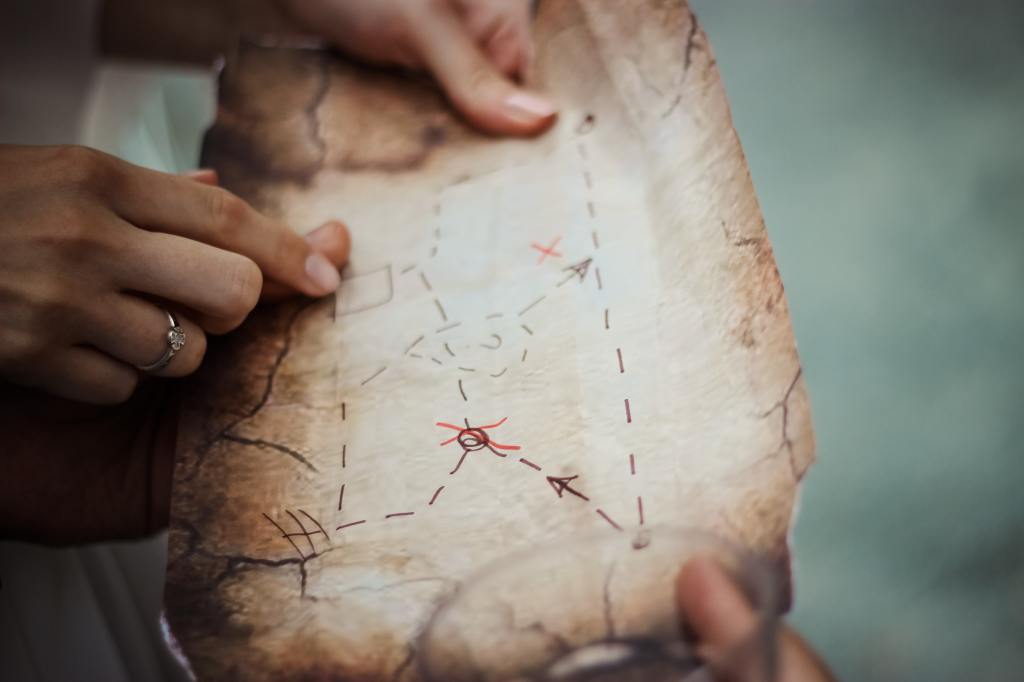
ARGs are interactive, networked narratives (dubbed storyscapes) that behave like complex scavenger hunts. They rely on existing real-world environments as their game space and employ transmedia storytelling, often both online and offline, to deliver content that may be altered by students’ ideas or actions. They can be considered “games you play in order to get more out of real life, as opposed to games you play to escape it” (McGonigal, 2011, Chore Wars, para. 30). Such ARGs have the potential to provide learning environments that help foster competencies and extend education to where learners are not only consumers of knowledge, but producers of it as well.
A step away from the passivity that learners may associate with the traditional classroom, the dynamic nature of Serious ARGs can motivate players by giving them a focused problem to solve. The solution process elicits knowledge and learning rewards, while goal-driven environments morph player game play into a focused, engaged learning experience (Lynch, Mallon, Connolly, 2015, p. 35).
ARGs are a relatively unfamiliar concept, particularly in the realm of education. Patrick Jagoda, PhD, Associate Professor of English at the University of Chicago, does a great job giving a bit more background in the video below. Jagoda is also a researcher behind one of the articles and ARGs I analyzed (The Source).
To help demonstrate what a serious ARG looks like in practice, here is a trailer for the ARG Urgent EVOKE, by game designer and author, Jane McGonigal (cited above).
ARGs can be used as instructional tools in any subject (often with a cross-curricular lean), and as part of media pedagogies; they can be used to teach History, STEM subjects, literacy and any combination therein. They often challenge students to problem-solve and to employ other 21-century competencies (such as collaboration).
As there appears to be a research gap with educational ARGs in general, and in the way social technologies are best utilized within ARGs, specifically, I created an annotated bibliography that reviews articles with a more a general focus on ARGs. Within these articles, I then considered how social technologies are leveraged in each case.
This Annotated Bibliography helped inform and illuminate a response to my critical inquiry:
“How can social technologies successfully be integrated into Alternate Reality Games intended as instructional tools in the classroom?”
Teachers have a legal and moral duty to care for their students best summarized by the Latin phrase “In Loco Parentis” — in the place of a parent. In Ontario, and in many other parts of Canada, it’s the doctrine teachers embody in their practice and in their classrooms.
But we now find ourselves in an unprecedented time where parents need to take on the role as surrogate classroom teachers, as schools, daycares and many other places remain under lockdown.
For many families, this is the start of Week 10, and even as some restrictions have begun to ease, schools remain closed in Ontario. If you are fortunate enough to have the time to devote some attention to your children’s learning yourself (think of yourself as their tutor), here are five tutoring pro-tips to ensure the time is spent meaningfully.
Credit: Unsplash | Jeremy Avery
Tip 1: Choose your tutoring time strategically
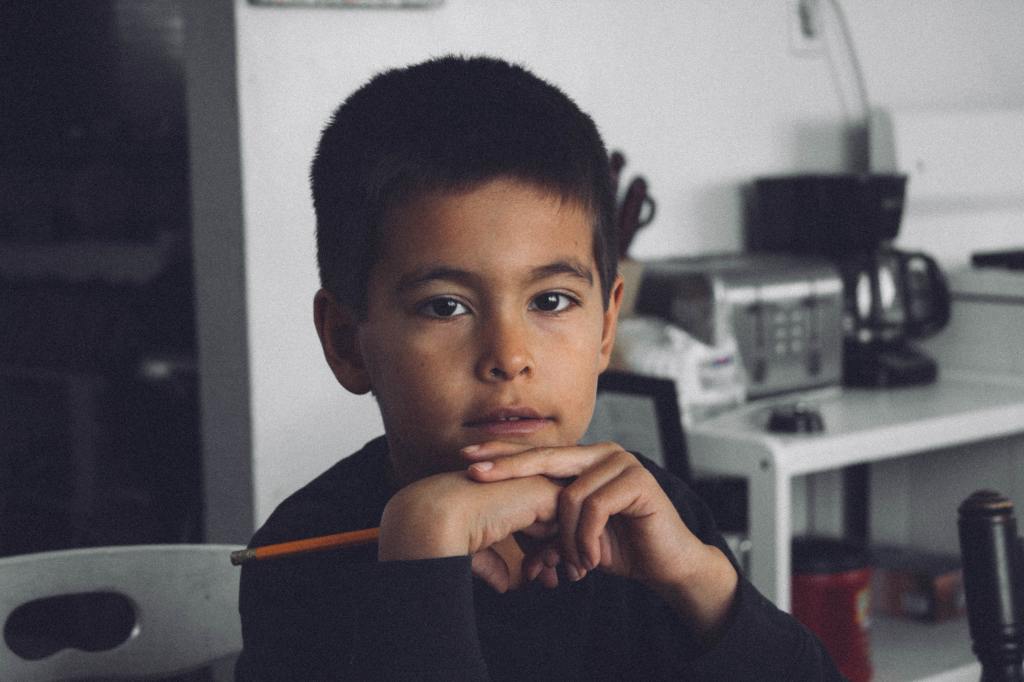
If you have some flexibility, choose the time you spend with your child focusing on reviewing their learning strategically. Opt for a time when they are well-rested, not hungry, and when they are likeliest to be focused and cooperative, and that you can regularly schedule. Often, this can be mid-morning once or several times a week, but it can also follow an outdoor break or some kind of physical activity early in the afternoon. The idea is that your child has had the opportunity to have their basic needs met, and to have had a chance to shed pent-up energy (there is a reason recess was invented). If evening time is the only time that works for you, go for that. Even one weekly session consistently can lead to positive results over the long-haul, and this is a marathon, not a sprint, so find something that works for your family’s schedule. Then — and this is the important part — communicate this time in advance to your child. You can say something along the lines of, “On Saturday, after breakfast and our walk, I want us to sit together and take a look at how school has been going. I’m here to help support you, and answer any questions.”
You will likely face frowns, moaning and some (or a lot!) of resistance at the idea, but I’ve learned that over time, kids appreciate knowing what to expect and what’s around the corner, and that they are more cooperative and less anxious over the long-haul. Then — and this is the other critical component — commit to this time. Pencil it in, and plan around it.
In the meantime, you may also want to review the 10 teaching considerations to help understand how best to support your child’s learning.
Tip 2: Come prepared and state your intention and learning goal
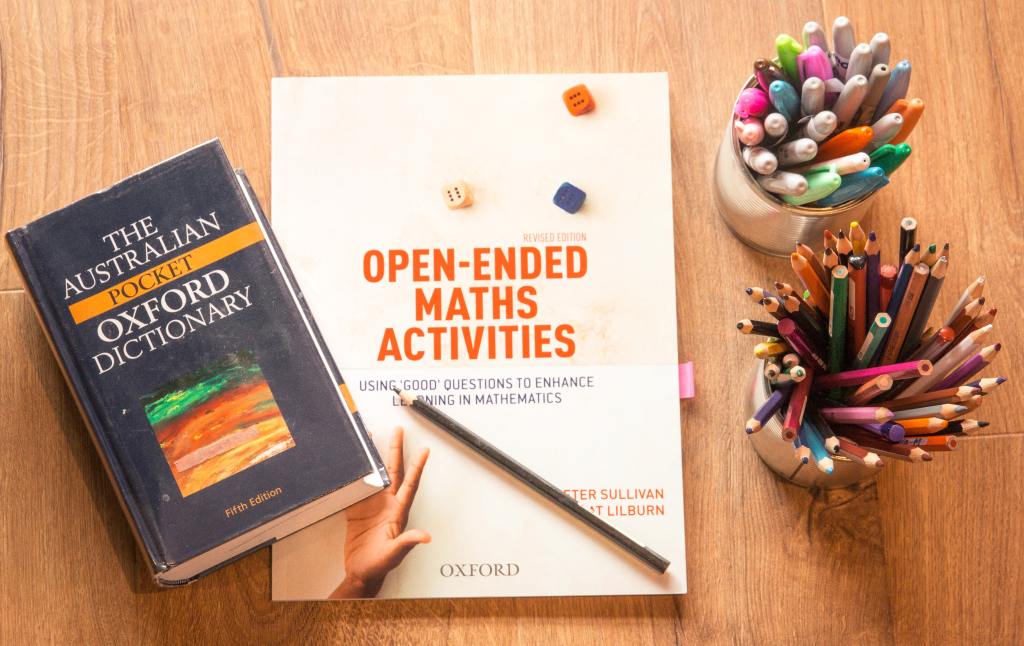
Find a clear workspace such as at a table, prep whatever materials you’ll need to help them with their work (notebook, pen, pencil, eraser, laptop with preloaded resources such as the dictionary, thesaurus, etc.). Then sit 90 degrees from your child, so you can have good eye contact, while also seeing their work, and share with them what you’re hoping to accomplish in this time.
The very first session might include simply having them show you and walk you through their work so far. What have they done so far, what are they most proud of? It’s important to give them the opportunity to feel successful and to establish a positive tone for your sessions (this is not the time to be overly critical, and it’s important to keep this situation, their stage of development in check).
Credit: Unsplash | Lewis Keegan
Tip 3: Signal your undivided attention
Signal they have your full attention.This is not the time for interruptions or distractions. Kids learn by example, and when they see the level of attention and energy you devote to their learning, they are more likely to take their own efforts more seriously. Put the phone down and away, and turn off any distractions, including any notifications on your devices.
Tip 4:Review what’s New
Marina Koestler Ruben’s excellent book “How to Tutor Your Own Child” sets aside some time to review what your child has learned up until now. She advises not to ask “if there anything new,” (this gives them an all-too-easy out with a simple conversation-shutting “no”), but “what is new?” What has your child been learning in the last X amount of time? You may want to ask them to break things down by subject, and for older students, to review any assignments or feedback they have received from their teacher(s). When it makes sense to do so, feel free to work in any personal related anecdotes to help learners connect their learning to the wider world.
Tip 5:Review what’s Now
Once you’ve gotten a good sense of what’s happened to this point, ask your child what are they currently working on? What assignments do they have? What are they learning now? Remember: You don’t have to tackle everything all at once in one session, so prioritize and ask them what task / assignment would be most helpful to focus on right now? It may be most helpful to focus on any topics that are confusing or unclear first. If you don’t have all the answers (and who does), you may want to help your child find reliable resources that can help clarify their questions (if you don’t have the answer, that’s ok — you can figure it out together).
If your child is less open about discussing what they are struggling with, you may need to rephrase your prompt to, “Tell me / show me what you know about X topic,” and have them walk you through their understanding, and then try to identify any learning gaps. Ask follow-up questions, and ask them to demonstrate, not just describe, if appropriate (i.e. long division).
Tip 6:Plan for what’s Next
Depending on how the previous part went (as well as how old your child is, and how long your they have been sitting), you may want to include a brief “brain break.” This can be a brief break that includes some sort of physical movement, or the opportunity to run to the bathroom, refill water, etc. (this doesn’t need to be long — can be 5-10 minutes).
Once back at the table and seated, you want to focus on what is coming up next: any long-term or ongoing assignments, review due dates, and consider what learning will happen in the week ahead. You may also want to ask your child, “what do you think your teacher will teach you next, that’s related to X?” You want to instil a habit of looking ahead and anticipating learning, rather than just reacting to the learning. It’s a different level of student engagement.
Tip 7: Quit while you’re ahead
When you’ve accomplished your learning goals for the session, or if your child has had enough, leave off on a high note. Share one positive observation about your child’s efforts during this session, and ask them to consider what they want to work on. You want to establish a positive association with these sessions, and don’t exhaust the learning or the learner.
It may be more helpful to start with multiple shorter sessions and build towards a longer single session, to help your child adjust, if needed.
Lastly, establish with your child what goals they can work towards for the next session, and establish how you will be able to measure / assess together whether they’ve met them (is it to read X number of pages, complete a section of an assignment, etc.). Set aside time for your next session and repeat.
As always, these resources are here to help support you and your learner, and I’d love to hear what’s working or not working for you. Feel free to follow me on Twitter or Instagram, and share your questions, concerns, or experiences, and I will do my best to help. 🤓
Last week, I posted some resources for parents who are looking to introduce a school-day type structure into their kids’ days, should they be ready.
This week, I want to talk about the kids and the parents who are in a different situation…who’re struggling to cope with this new normal and who are barely making it day-to-day, never mind aligning their child’s learning with some far out, pretty-on-paper schedule.
These may be parents with likely younger kids who have shorter attention spans than older learners, kids with learning exceptionalities in need of greater supports in and out of school, and kids whose parents have stacked work days as it is, with busy schedules of their own.
I have heard of some parents shifting gears and withdrawing their kids from homeschoolingaltogether. If your situation is more similar to this group, you are not alone and may want to focus on teaching your child valuable life skills instead.
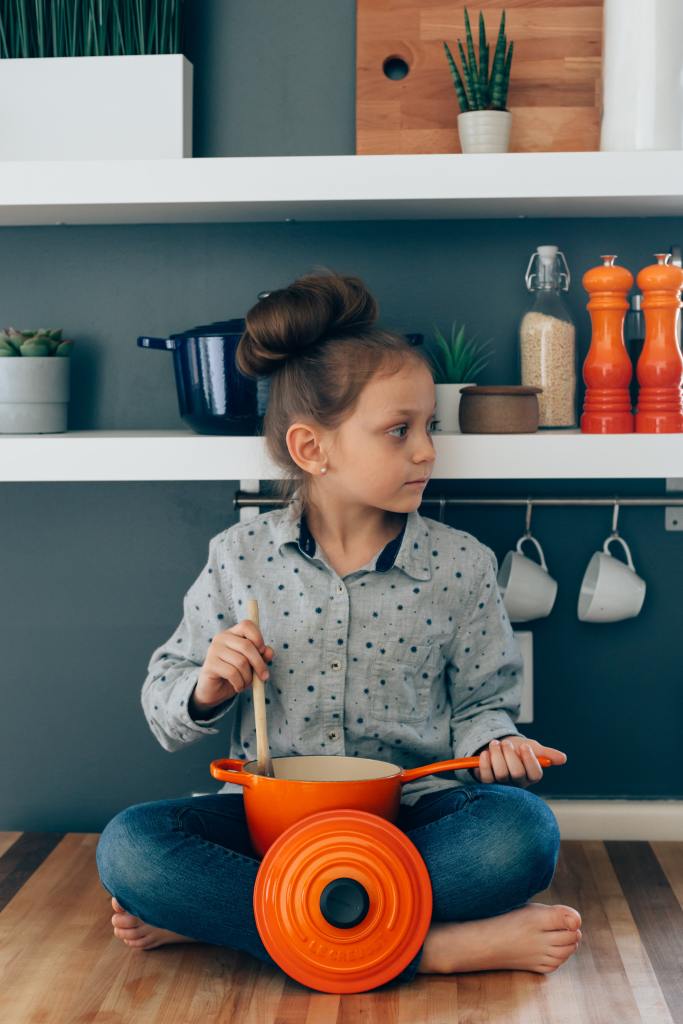
My teaching philosophy centres on an inclusive definition of learning, and that includes informal learning (such as knowledge and experiences passed down generation to generation through storytelling), as well as learning through travel and experiential learning. This period of physical distancing and social isolation makes it a perfect time to share with your own children all the valuable skills they will need as they grow up. In the process, consider folding in arithmetic, reading and communicating.
Here are some suggestions for activities to focus on instead:
Different regions and plants of the world, with focus on local
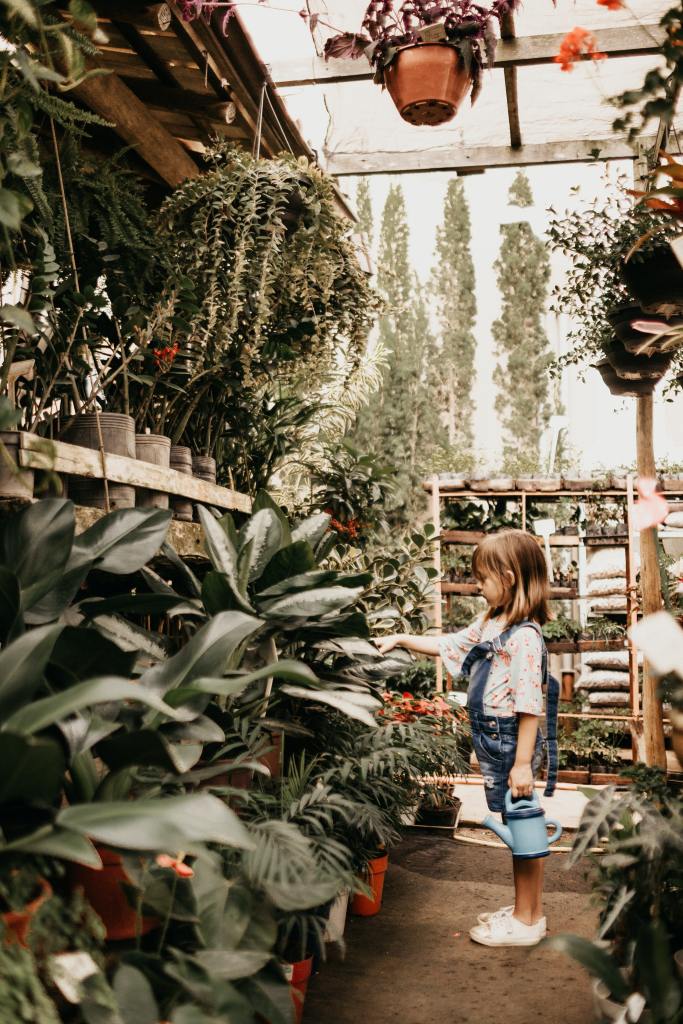
Creating a reading garden
Bird feeders
HOUSEKEEPING, TIDYING & CLEANING: (looking after and caring for the things we have)
You can also teach them a skill you are particularly good at (drawing, guitar, auto mechanics, carpentry, cartography & navigation, film and cinema, photography, documentaries, knitting — whatever your passion, fold them in). Also, allow them to deepen the skill they are passionate about (drawing, gaming and game theory, music, video production — they take the lead, but hold them accountable for demonstrating what they’ve learned).
If you and your learners do have the bandwidth to incorporate some academics, focus on encouraging your learners to read as much as possible, and involve them in conversations based on the ideas of the readings. You can do the same with movies, if they are old enough.
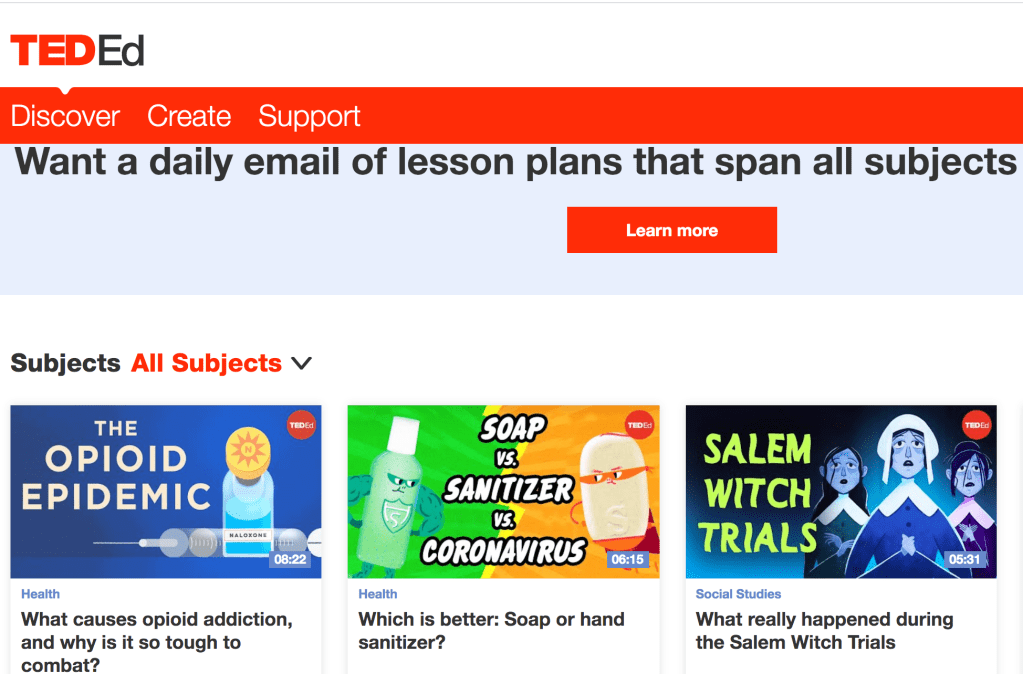
If you need shorter conversation-starters that are still education-based and are inclusive to many types of learners, I’m a big fan of TEDEd— quick snackable videos that cover a range of topics and offer supplemental material and are an offshoot of the now well-known TED Talks.
Credit: TEDEd
As always, I’m happy to hear what’s working and what’s not, as well as to share resources and ideas. Feel free to leave a comment and share your thoughts. Wishing you a great start to the week (week 9 for many). 🤓
As teachers are expected to teach the local provincial curriculum (here, that’s the Ontario Curriculum for Elementary and Secondary grades), teaching is very intentional; teachers take great care in structuring their lessons so they evoke student learning.
To help them organize the flow of the lesson so it progressively goes from simple to complex, and from guided to independent, teachers rely on lesson plans to scaffold student learning.
To help during this unprecedented time as we remain under lockdown, I’ve provided sample Lesson Plan templates via Google Docs that will automatically prompt you to create a blank copy for your personal use only (and so multiple people aren’t making changes to a single document).
The first is the one I’ve come to use in my own teaching while the remaining three are Google templates.
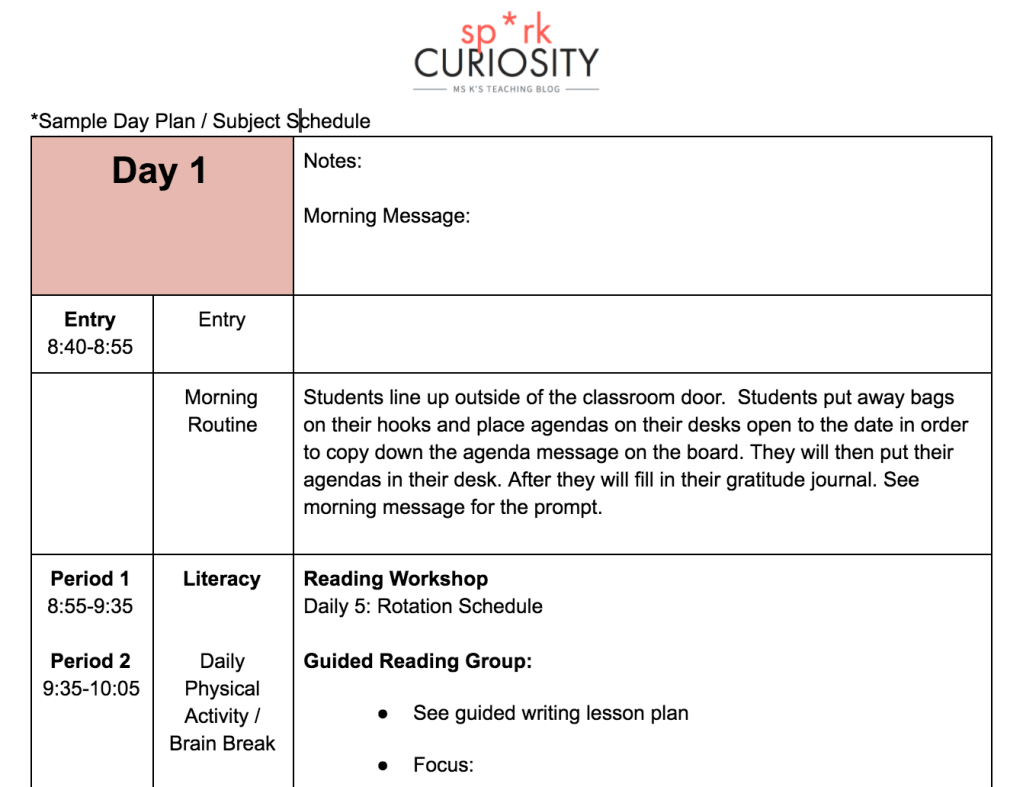
I’m also attaching a sample daily schedule to help parents understand how teachers structure their days for Junior / Intermediate students (Grade 4-6 and 7-8). As these are free resources, they are not intended for anything other than for your own personal use, and to help you structure your child’s learning during social distancing and the COVID-19 pandemic, should your child be ready to transition to a more structured daily schedule (not all learners may be, and this is OK; each child is coping differently during this pandemic).
FREE sample daily schedule (what a daily schedule is like at school) and day plan
Additionally, Google has launched their own Google for Education learning portal with some interesting learning resources, such as for Language, Arts & Culture resources (note that these aren’t specific to the Ontario curriculum, but may complement some objectives nicely).
My hope with these posts is to help support parents and learners, and if you would like to see anything specific, please comment below and I will do my best to help. 🤓
Like many things about the COVID-19 pandemic and social distancing, families are going through various stages of coping with this new reality at home…We’ve seen denial that the novel coronavirus was a threat, to eventual acceptance that it was here and it was real, to panic-buying and empty shelves, to #CancelEverything and the ultimate retreat indoors. We’ve gone through baking and cooking projects (sour dough, and more), living room concerts and DIY haircuts…
Many families are now starting Week 7 of social distancing, and with public schools in Ontario remaining closed at least until the end of May (and likely longer), there is ongoing need for learning resources that students can use to continue their learning from home.
One thing I’ve heard from parents with younger kids is that there is worksheet fatigue…While worksheets can be a great way to organize and plan bigger projects, and while they offer families some flexibility for focused independent work, they aren’t always terribly exciting to younger learners, and don’t always engage and include learners with exceptionalities.
One Literacy / English-based activity that is easily scaled and individualized for each learner and their age, and is engaging and topical, is a Covid-19 Time Capsule Activity.
The idea is that we are living through history and want to commemorate this historic period for future reflection using a few guiding principles. While you can certainly use worksheets if this works best for your learner (this is one great free resource), you may also want to engage more tactile learners in other ways.
You can even make this a family project by having each family member make their own artefact time capsule for posterity (yes, this includes you — favoured zoom wine you wish to bury?). You can then pack your individual time capsules into one joint family capsule. Some ideas: Adults can create a time-specific scrapbook. Older learners can focus more on symbolic artefacts and even produce their own highly visual digital time capsule, by using free tools such as Pinterest or Google Sheetscreating something akin to a vision board, or do a video diary by recording quick videos in closeup of what their day was like. Here is a step-by-step process of how you can even use Google Slides to create a digital time capsule (it will automatically force you to create your own personal copy of the docs and the slides so your child can edit it).
If they require guidance for what to include in their video, you can have them respond to the following:
Rose – Something positive that went well that day
Thorn – Something difficult or challenging that they’ve been working through
Bud – An opportunity or something they look forward to cultivating
Credit: Unsplash | Roy Kasturi
For more tactile learners, your child can customize a container such as a box, bottle or a hollowed out book, and place “artefacts” (objects), newspaper clippings, pictures if you have a printer or polaroid, drawings and the like that are reflective of what they are experiencing right now. Draw your learner’s attention to their senses (what is a common sight, sound, smell, taste, touch in their new day-to-day), as well as to describe their feelings. Remind your learners that there are no right or wrong things to include here, but that whatever they include should be reflective of how they are spending their days and what they are observing around them. Ask them to imagine how someone who finds this time capsule 30 or 50 years from now might be able to understand what this time was like.
As with any time capsule, its key is its “timeliness,” so set a timeframe for what time you wish to encapsulate, and then commit to “closing” this time capsule on this day (you may choose to close it the first day that social distancing restrictions are significantly eased). You may even choose to commemorate the closing of the time capsule with a family ceremony, if you’d like. This can be an ongoing project, and can include the creation of one “artefact” per day. Add dates, and get creative.
If you wish to share your results, tag me on Instagram @ms_ks_korner — I would love to see your creations!




 sp*rk curiosity