10 Teaching Considerations for Parents Teaching Their Kids at Home

While not many parents have the option to devote a tonne of time facilitating their children’s learning during the COVID-19 Pandemic, there are some factors to consider that help ease the process. Here are the top ten things you should keep in mind when helping your child learn from home.

Factor 1: The New Normal is Abnormal
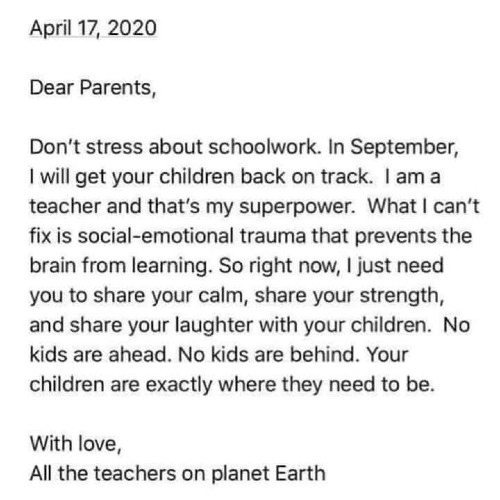
First and foremost, consider that these are abnormal circumstances, and that any learning that is to happen, is happening in the midst of a world-wide crisis. There are a lot of feelings tied to this, and it is worth acknowledging your own child’s response…This post by a teacher is a good, guiding principle for those that are having a harder time coping with this new abnormal normal. 

Trauma and stress in general do block the brain’s ability to absorb, process and retain information, so it’s always best to begin any learning facilitation from a place of compassion. 

Factor 2: Learning Exceptionalities 

What learning exceptionalities does your child have? Has your child been assessed for any exceptionalities and do they have an Individualized Education Plan (IEP)? If you haven’t looked at it yet, this is a good place to start. Does your child require visual or auditory aids? It would be unfair and unreasonable to expect them to get through a written article or text-based worksheets without assistance if they require a “modification” (teacher-speak for delivering the same content in a different mode, such as video). Exceptionalities include giftedness, autism, ADHD, and can even co-exist as multiple exceptionalities in a single learner. Recognizing this can help remove learning barriers, and allow you to meet your child wherever they are on their learning journey.   

Factor 3: Age & Developmental Stage
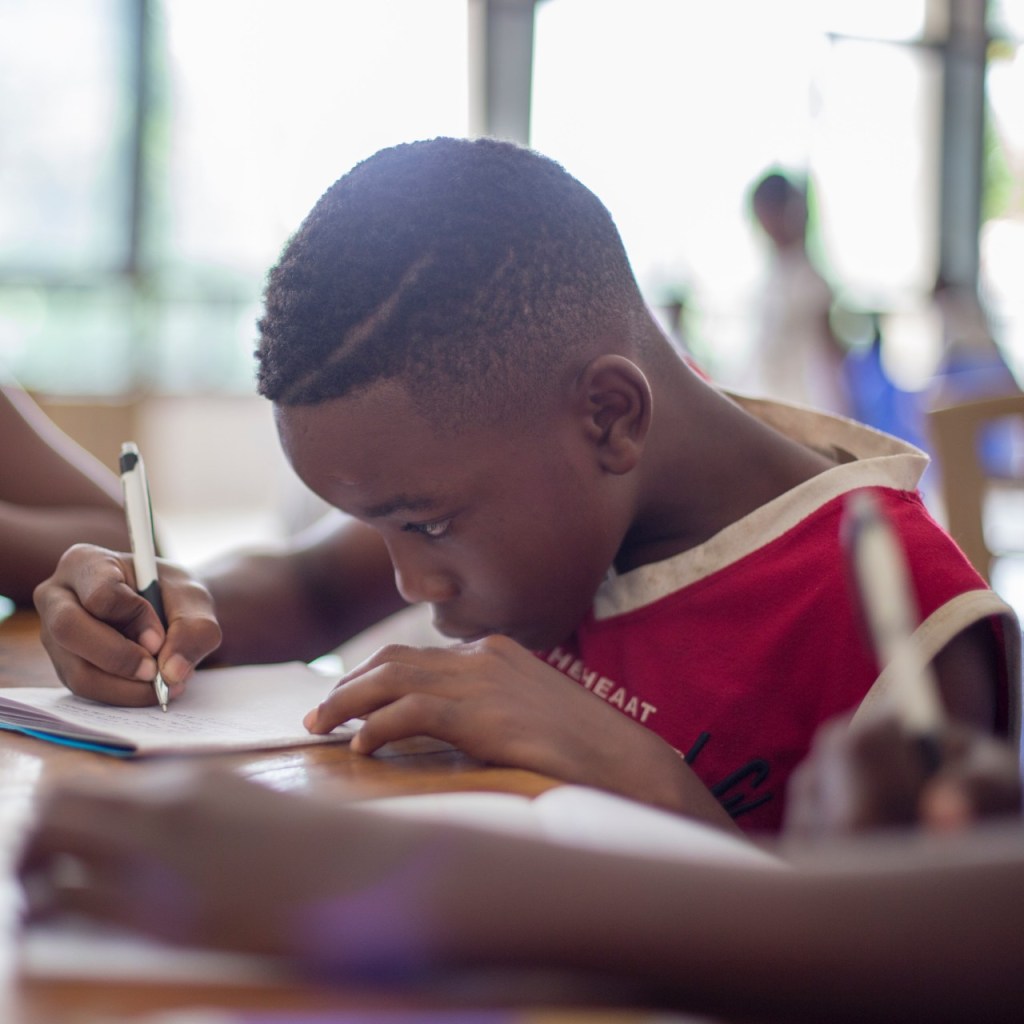
Consider your child’s age and / or developmental stage. The brain develops in phases, so it’s important to keep your child’s readiness in mind. No child I’ve ever met learned to run before they learned to crawl. 

Factor 4: Prior Learning 
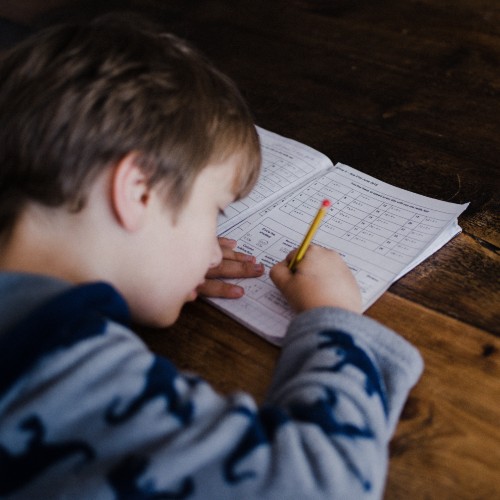
What has your child learned already? Have they learned the alphabet but are only starting to learn phonics (the ability to hear, identify and manipulate phonemes — distinct units of sound). Or have they learned to write basic sentences, but have yet to combine multiple sentences into a thematic paragraph? 

Teaching and learning are all about scaffolding — the idea of moving learners progressively towards deeper understanding and greater complexity.  

Factor 5: The Subject
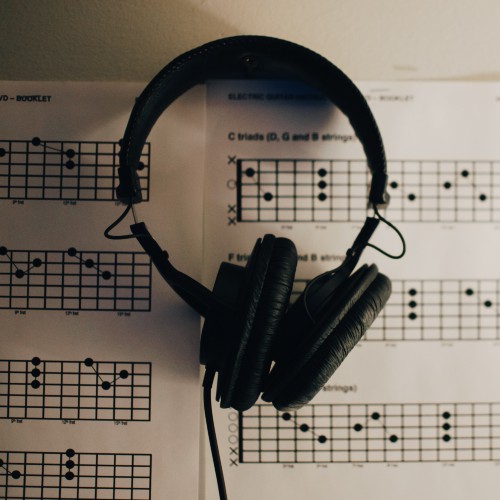
What subject are you focusing on? Traditionally, subjects depend on grade level / developmental stage, and they are divided relatively neatly into areas such as Literacy, Numeracy, Social Studies, Physical Education, etc. 

It  may be helpful to refer to the Ontario Curriculum documents for elementary and secondary grades to see what your child is expected to have learned by the end of this year. 

In more flexible learning environments, such as perhaps right now, it may be helpful to combine multiple subjects into single learning experiences.

Factor 6: Your Child’s Interests, Talents, and Abilities  
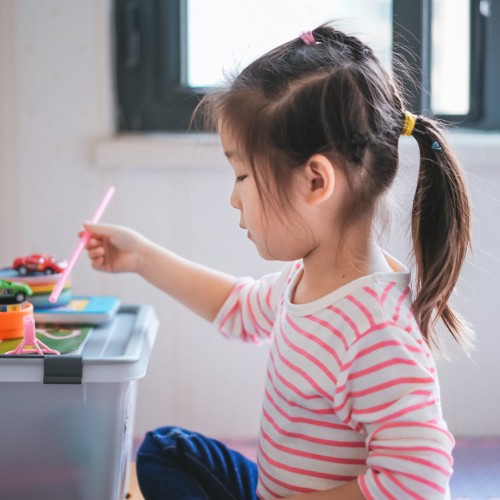
While this is currently listed as the 6th item on this list, it belongs equally in the first slot…Tapping into your child’s natural sense of curiosity and wonder will not only motivate their learning, it will increase the chances of making any such learning a positive experience, and raise the likelihood of the topic being remembered. Your child’s interest provides a door through which you can impart many lessons. 

Factor 7: Make Learning Social

If possible, connect to other parents and their children, and coordinate discussions (likely unlikely for many families, but worth mentioning). Otherwise, engage your child in conversation about what they learned and eek out their opinion on the subject. Ask open-ended questions, offer encouragement, and create space for them to be heard. 

Factor 8: Embrace Informal Learning 
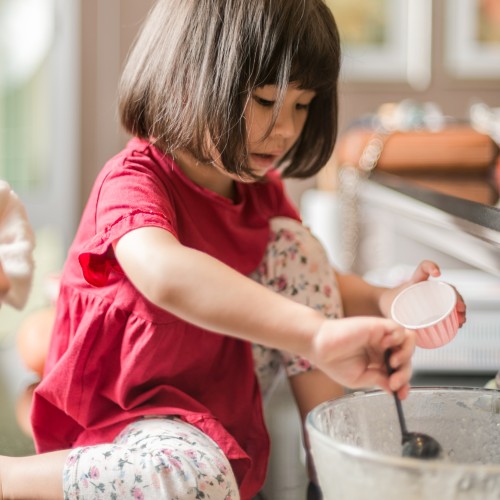
Allow for informal learning to happen and count that it too contributes to your child’s overall base of knowledge. So let them disconnect, watch that YouTube video, read a comic or play that video game. Then, try again. And again. If you don’t already, include them in meal preparation, laundry, budgeting, and other tasks that need doing. Life skills such as these should be part of any child’s learning, in and out of school. 

Factor 9: None of This Will Work All the Time, Always
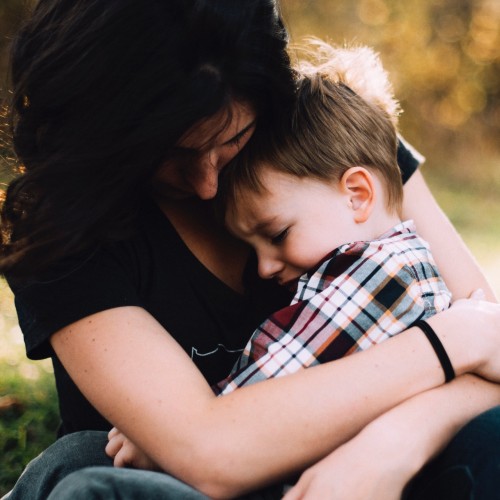
Despite all your hard work and consideration, sometimes no amount of attention to the above will make your efforts land the way you expect them to…. This is ok, even the most experienced teachers go through this and this is also part of the learning process. Sometimes your child will be especially resistant, throw a fit, have a meltdown — and you may feel like you’re on the verge of one too. Take a breather… As the first factor suggests, the most important thing here is that you remain connected to your child. 

Factor 10: Reflect

Consider what worked well and what didn’t. Teachers are taught to approach their practice through constant self-reflection. What would you do again? What would you do differently next time? Take note. Tomorrow is a new day. 

How to Help Your Child Learn From Home During the COVID-19 Pandemic and Social Distancing in Ontario

Credit: Unsplash | Emma Matthews

As we settle into this new, bizarre version of normal, let’s take a moment to recognize that nothing in this reality is ideal. 

This includes how we manage our children’s time and learning. (A bit more screen time than we hoped? No judgement.) So let’s take the pressure off… There’s enough to worry about. Instead, let’s recognize that we are doing our best, and let’s see this as an adjustment period to a pretty sudden global shift in circumstance.

The most important thing we can do is remain connected to our children in this time. This includes as they adjust to learning from home. Schools in Ontario too have started to unveil their Remote Learning initiative. But, as a teaching colleague shared, this won’t (cannot) replace full-time school learning: 

“Just to be clear, starting April 6th we will be Emergency Remote Teaching, not e-learning, not online learning, not any other wonderfully tech savvy trendy name people choose to give it. We are hastily throwing together an imperfect system meant to provide basic online support to a population that isn’t 100% ready, willing or able to participate. That’s not online learning. Online courses are meant for secondary schools and above, they are meticulously planned and have student populations that are ready, willing, and able to meet their criteria, not limited to academic ability but also technological competence and availability. Go easy on your kids if they don’t get it, go easy on yourself if you don’t get it, go easy on the teachers if it’s not working 100%.” – Stacky Whit 

So with this in mind, here are some helpful online resource hubs to help you guide your kids through this process and to support their learning from home… 

More resources and support to come…Stay well, and stay safe. ❤

Field Study Blog: Evergreen Brick Works

Emphasizing hands-on, real-world learning experiences, (a place-based) approach to education increases academic achievement, helps students develop stronger ties to their communities, enhances students’ appreciation for the natural world, and creates a heightened commitment to serving as active, contributing citizens.

– David Sobel, 2004 (Skoutajan, 2012)

OUTDOOR / PLACE-BASED EDUCATION

I’ve grown up exploring the outdoors. Some of my most favourite school memories in fact, did not take place in school at all, but outside – at outdoor education centres where we participated in scavenger hunts, horseshoed, learned how to make candles, and listened to stories on bales of hay.  Additionally, my most vivid informal learning experiences similarly took place while gazing at the night sky, or collecting bugs, skinks, snakes, and plants, or simply observing the waves by the Adriatic shoreline. This excitement of discovering what’s around the bend, or off the beaten path has fueled me ever since.

As such, seeing my own son embark on his own educative journey, place-based education (what I otherwise often refer to as outdoor education), always seemed to me an intuitive way to give him grounding in the world, and to enrich his understanding about our place in it. I hold this belief so dearly, a few years ago, while I was still a producer at Discovery Channel, I pulled him out of school for one month to go explore the Gulf Coast when the opportunity opened up. Now with the added gleanings through my teacher education programme at OISE, I have greater understanding why it is a critical way to connect students, not only to their communities, but to nature, and the world at large.  

(RE)DISCOVERING EVERGREEN BRICK WORKS

With this in mind, I was excited to find out that we would participating in a field study at Evergreen Brick Works as part of my cohort’s Social Studies class. I had spent some of my summer biking and exploring the area and the market. I appreciated its unique design, and green spaces, but had little knowledge of its historical significance as a brick factory to my home city (Toronto).  Additionally, we learned from our guide that once a quarry and brick factory was shut down, it turned into a makeshift gathering spot for underground parties (a testament evidenced by its many remaining graffiti tags). Soon after, however, community members reclaimed and fought to restore the space to its natural habitat – no easy undertaking. Some of this insight came by way of a documentary we screened in class Brick by Brick.

Pictures/IMG_0483.JPG

My Origin Story: How I Came to Teaching

I grew up surrounded by lifelong educators — people truly passionate about the wonders of the world, and our discovery of it. They taught me that education provides a compass by which to better navigate life (this includes all forms of learning, not just formal, academic learning). For my benefit too, my best teachers armed me with an undying curiosity and an equally undying desire to satiate it. Knowing how much I enjoyed tutoring growing up, I knew I would eventually heed this call to teach myself. 

Witnessing my own son go through his own learning journey — the good and the bad — only fortified this desire. His experiences going through special education and the gifted system only made me appreciate the importance of student-centred teaching. This was amplified when I applied this philosophy through my own teacher education at University of Toronto (OISE) and to practice in my own classrooms. 

So why here, why now? Understanding teaching and learning from these multiple lenses of learner, mother, teacher makes me sensitive to the competing pressures teachers, parents, and students in turn face when steering their own learning. Applying my knowledge from my existing work experience in media, I am a firm believer that student learning needs to connect to real-world experiences.

So my goal here is to explore and provide teaching resources to busy teachers and parents that are engaging, student-centred, and that ultimately seek to empower learners to feel more connected to themselves, each other, and the world at large. 

© Dragana Kovacevic and DraganaKovacevic.ca, 2019. Unauthorized use and/or duplication of this material without express and written permission from this site’s author and/or owner is strictly prohibited. Excerpts and links may be used, provided that full and clear credit is given to Dragana Kovacevic and DraganaKovacevic.ca with appropriate and specific direction to the original content.